
Trump Pledges $5,000 ‘Dividend’ for Every U.S. Adult — But Congress, Cost and Tariff Revenue Stand in the Way
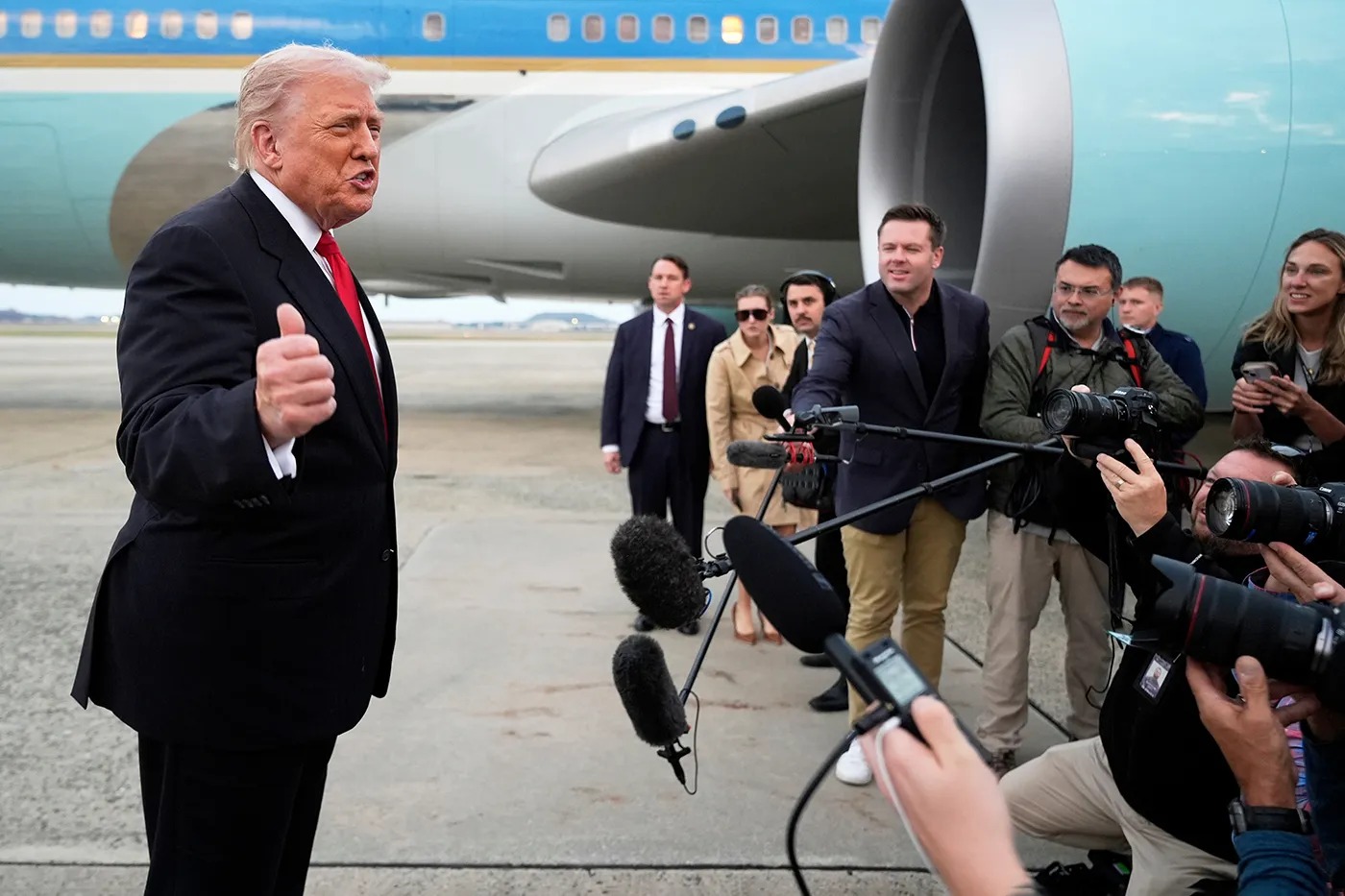 President Donald Trump has tied a proposed $5,000 payment to Republican control of Congress after the November midterms. The promise is real; the funding mechanism is not yet enacted, and available tariff revenue is far below the roughly $1.2 trillion price tag estimated by Reuters.
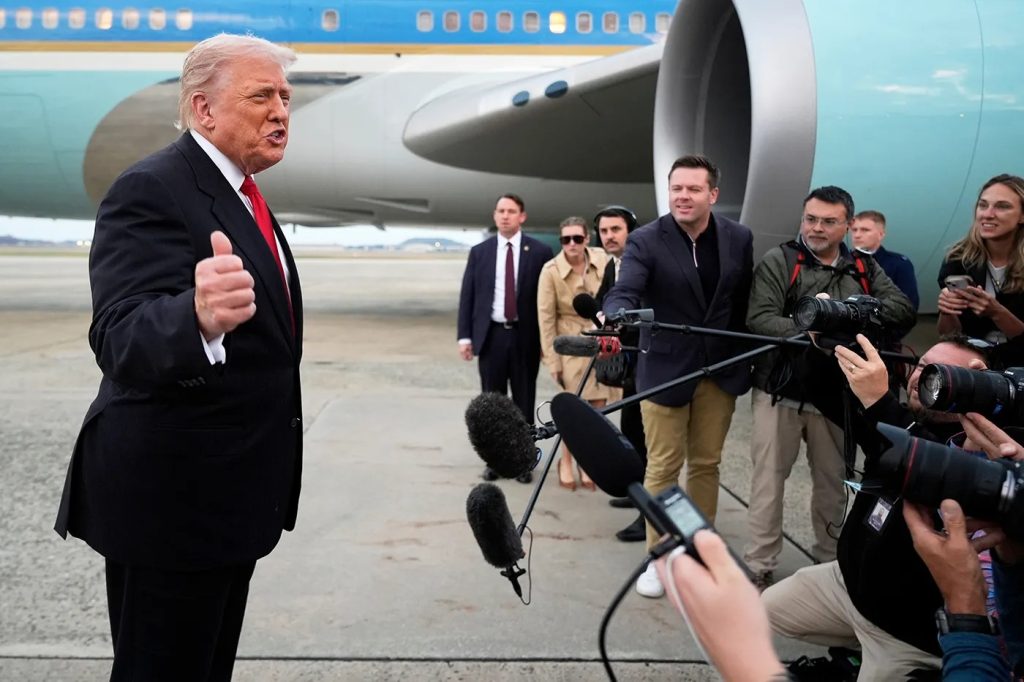
WASHINGTON — President Donald Trump has proposed sending a $5,000 “dividend” to every adult U.S. citizen if Republicans retain control of both the House and Senate in the November 3 midterm elections, turning a campaign promise into one of the largest potential direct-payment proposals in modern U.S. history.
Trump unveiled the pledge during the Republican midterm convention in Dallas on September 9. He compared the payment to a corporate cash distribution to shareholders and said the money would go to “every adult citizen in the United States of America.” He later added one condition: the money, he said, should be spent inside the United States.
The White House amplified the proposal the following day, calling it the “Trump Dividend” and presenting it as a benefit made possible by the administration’s broader economic agenda.
But the central question is not whether Trump made the promise. He did.
The unresolved questions are how Congress would authorize it, how the federal government would finance it, who would ultimately qualify and whether the payment could be delivered without adding substantially to the deficit or increasing inflationary pressure.
What Trump Actually Promised
Trump’s pledge was explicitly tied to the outcome of the November midterm elections.
“If the Republicans win the House of Representatives and the United States Senate,” Trump told the Dallas convention, “I will issue a dividend to every adult citizen in the United States of America for $5,000.”
He later said the payment would be called the “Trump dividend” and that recipients would have to spend it in the United States.
The White House’s September 10 release repeated the $5,000 figure and described the proposal as a cash payment to every adult American citizen.
That means the basic claim in the circulating description — that Trump proposed a $5,000 payment to U.S. adults — is substantially accurate.
However, two qualifications are essential.
First, Donald Trump is the sitting president, not the former president.
Second, the proposal is not currently an enacted federal benefit. No law has yet appropriated the roughly trillion-dollar sum that would be needed to make the payments.
The Price Tag: Roughly $1.2 Trillion
Reuters estimated that approximately 240 million adult U.S. citizens could qualify if the promise were interpreted literally. At $5,000 each, that implies a total cost of about $1.2 trillion.
Other estimates vary depending on the population assumptions and whether high-income households would be excluded.
Vice President JD Vance subsequently suggested that wealthy Americans might not receive the payment, which would reduce the total cost. Trump’s original public statement, however, referred broadly to every adult citizen.
Even after excluding higher earners, the cost would remain extraordinarily large.
For comparison, the three rounds of federal economic-impact payments authorized during the COVID-19 pandemic cost hundreds of billions of dollars and required legislation passed by Congress and signed by the president.
A $1.2 trillion program would represent a major federal fiscal action, not a routine executive disbursement.
Where Would the Money Come From?
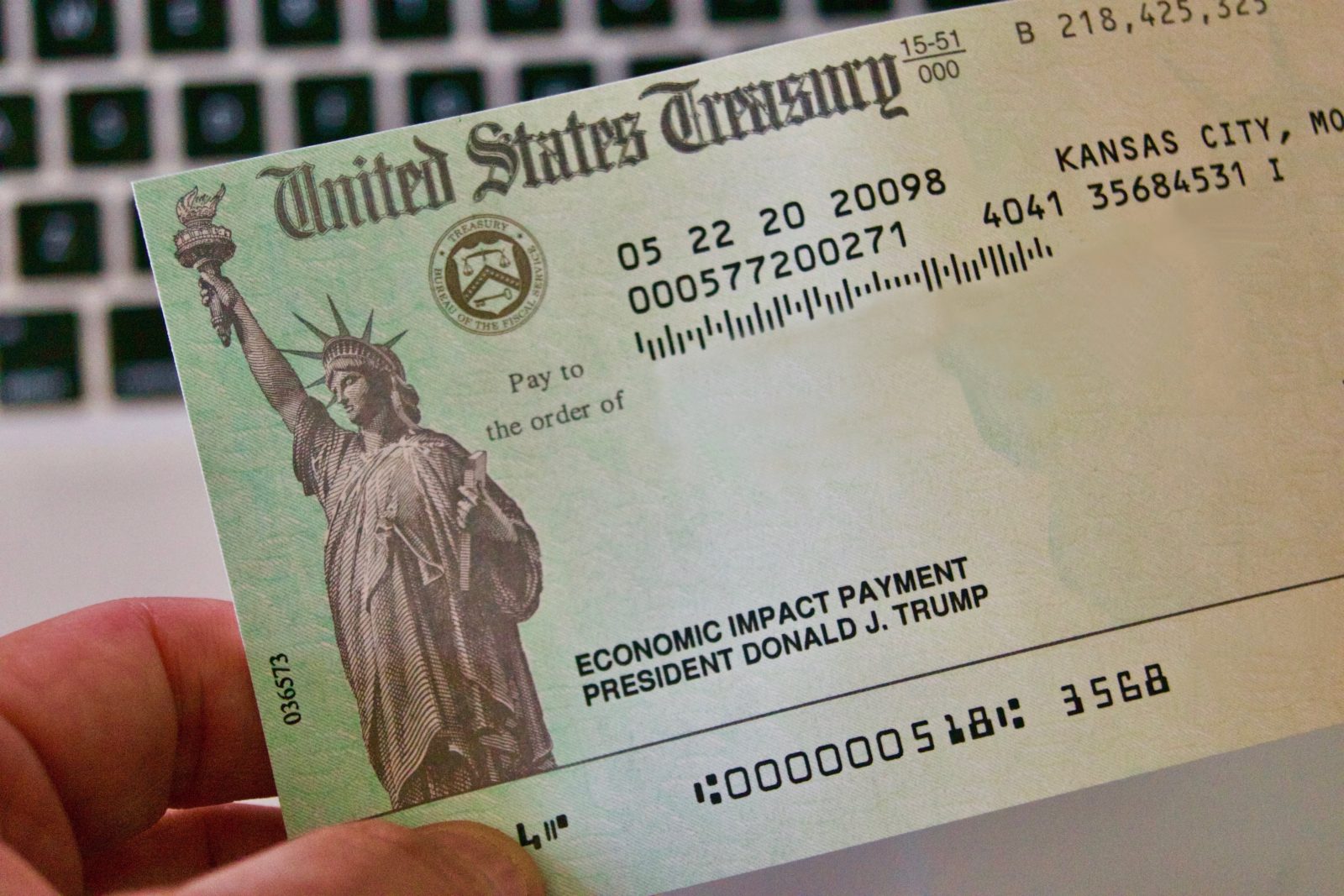 Trump repeatedly linked his ability to offer the dividend to the government’s economic performance and tariffs.
During the Dallas speech, he argued that Democrats could not offer the same payment because, in his words, “they don’t do tariffs” and “they don’t take in money.”
Vice President Vance was more explicit after the speech, suggesting that tariff revenue could help finance the payments.
But the available numbers do not support the idea that current tariff collections alone could fund a $5,000 payment to every U.S. adult.
Reuters reported that the Congressional Budget Office estimated roughly $167 billion in tariff revenue for the fiscal year ending September 30 — only a fraction of the approximately $1.2 trillion needed for the full proposal.
The gap is even more important because U.S. tariff policy changed substantially in 2026. The Supreme Court invalidated tariffs imposed under the International Emergency Economic Powers Act, requiring refunds of large amounts of previously collected duties. CBO’s August update said those refunds and subsequent changes in trade policy reduced projected net customs revenue significantly.
Tariffs therefore may contribute revenue, but current collections do not provide anything close to a standalone financing source for the full dividend.
Congress Controls Federal Spending
The proposal also faces a constitutional and statutory obstacle that cannot be solved simply by identifying a revenue source.
Article I, Section 9 of the Constitution states that no money may be drawn from the Treasury except through appropriations made by law.
That is the foundation of Congress’s power of the purse.
The practical consequence is straightforward: collecting money through tariffs does not automatically give the president authority to spend those receipts however he chooses.
House Speaker Mike Johnson publicly acknowledged that point after Trump’s announcement. Johnson said congressional approval would be necessary for the $5,000 payments, even while indicating that he would support efforts to enact the proposal.
Trump later suggested in an interview that he did not believe Congress would necessarily need to approve the money. But no publicly identified legal mechanism has been presented that would allow the executive branch to distribute more than $1 trillion in general cash payments without legislative authorization.
For a nationwide dividend to become a federal program, Congress would normally have to enact legislation creating the eligibility rules and providing the budget authority.
Could Republicans Pass It?
That depends on the composition of the next Congress, the legislation’s design and Senate procedure.
Trump conditioned the pledge on Republicans retaining both chambers. Even if they do, holding a simple majority would not necessarily guarantee passage under ordinary Senate rules, where most legislation can face a 60-vote threshold to overcome a filibuster.
Republicans could explore the budget reconciliation process, which allows certain tax and spending legislation to pass the Senate with a simple majority if it meets specific budget rules.
But reconciliation would require lawmakers to design the proposal carefully, fit it within a budget framework and make decisions about how to account for the cost.
Republican lawmakers have also expressed differing views about the proposal.
Some have signaled support. Others have raised concerns about the deficit and inflation.
Those disagreements matter because the promise is not self-executing. The election result alone would not cause $5,000 payments to appear automatically.
The Deficit Question
The United States is already running a large annual budget deficit and carrying federal debt above $40 trillion.
If Congress approved $1.2 trillion in payments without an equivalent amount of new revenue or spending cuts, most of the cost would have to be financed through additional federal borrowing.
That is why fiscal analysts have focused on the gap between the proposed payout and available tariff receipts.
The Committee for a Responsible Federal Budget and other budget-focused organizations have argued that a dividend of this scale would worsen the fiscal outlook unless paired with a credible offset.
That conclusion does not establish what Congress will ultimately do. It simply reflects the arithmetic: a program costing around $1.2 trillion requires approximately $1.2 trillion in financing somewhere in the budget.
Could the Checks Increase Inflation?
Economists also disagree over the precise magnitude of the inflationary effect, but a large direct cash distribution would almost certainly increase household purchasing power in the short term.
If recipients spent a significant share of the money quickly, aggregate demand would rise.
The inflationary impact would depend on economic conditions at the time, Federal Reserve policy, household saving behavior and whether the payments were financed by taxes, spending cuts or new borrowing.
Some Republican lawmakers and fiscal analysts have warned that adding more than $1 trillion in cash to an economy already facing elevated price pressures could make the Federal Reserve’s job more difficult.
Supporters of direct payments could argue that households facing high costs would receive immediate relief and that requiring the money to be spent domestically could support U.S. businesses.
Those are competing policy arguments. What is not yet available is a detailed administration model showing how the proposed $5,000 distribution would affect inflation, growth, interest rates and federal borrowing.
This Is Not Trump’s First Dividend Proposal
The $5,000 pledge follows earlier proposals to return money to Americans through government savings or tariff revenue.
In 2025, Trump expressed support for a “DOGE dividend” that would have used a portion of projected federal savings for payments to households. That proposal did not become law.
He also promoted a separate $2,000 tariff-dividend idea. Those checks were not enacted.
The new $5,000 pledge is therefore substantially larger than the earlier tariff proposal and arrives much closer to a national election.
That history is relevant because it shows the difference between a presidential proposal and an authorized payment program.
Until Congress passes legislation and the president signs it — or another valid statutory authority is identified — Americans should not treat the $5,000 dividend as money that has already been approved for distribution.
What We Still Don’t Know
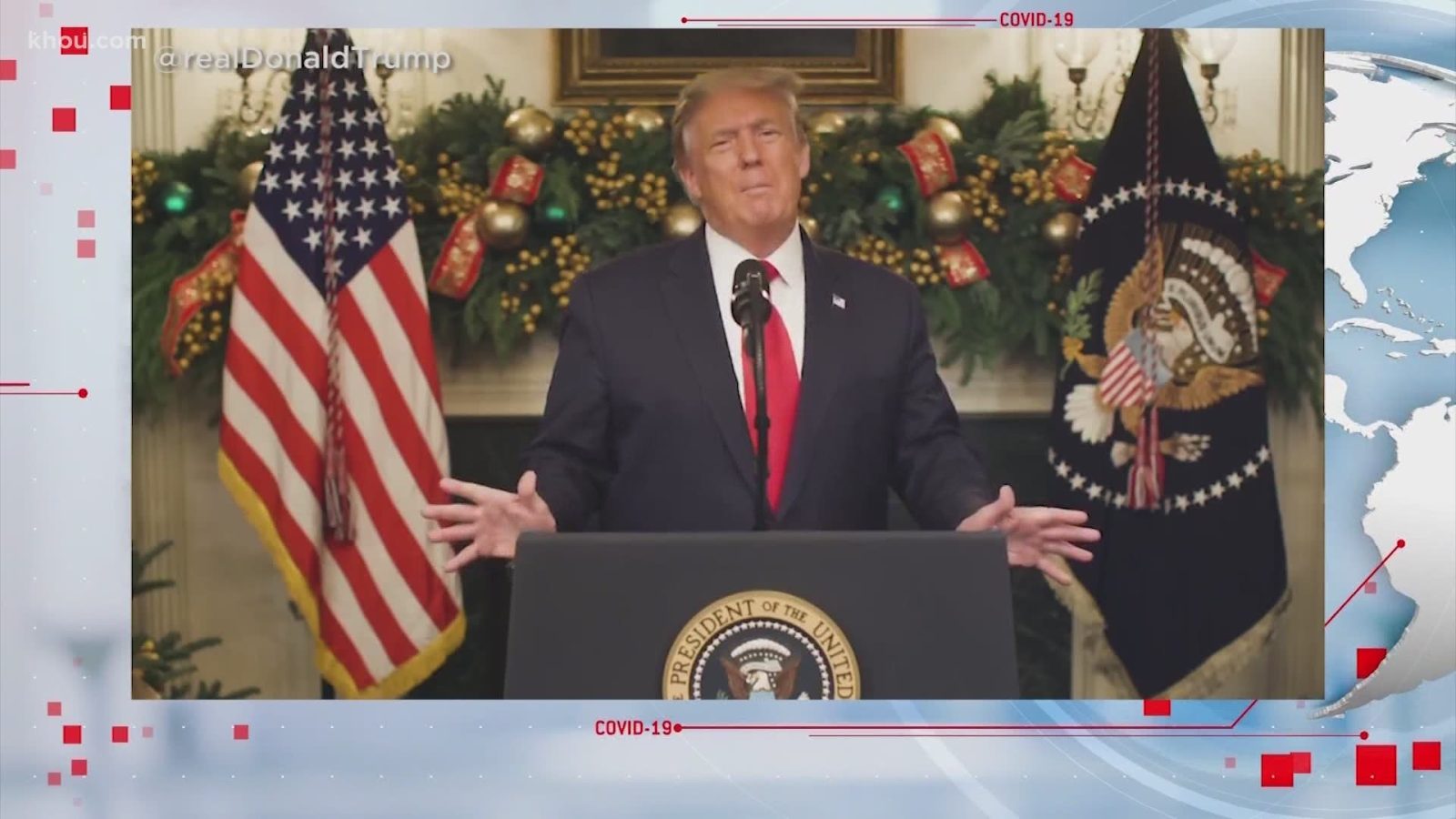 Several core policy details remain unresolved.
The administration has not published final eligibility rules. Trump said “every adult citizen,” while Vance indicated wealthy Americans could be excluded.
There is no enacted income threshold.
There is no official payment date.
There is no enacted funding source.
There is no published system explaining how a requirement that the money be spent only in the United States would be enforced.
And there is no final legislative text specifying whether payments would be taxable, whether incarcerated citizens or Americans living overseas would qualify, or how recently naturalized citizens and other edge cases would be treated.
Those details would normally be resolved through legislation and implementing regulations.
What Happens Next
The next decisive event is the November 3 midterm election, because Trump explicitly made Republican control of both chambers a condition of the promise.
If Republicans retain the House and Senate, supporters would still need to translate the campaign pledge into legislation.
That process would force Congress to confront the questions that a campaign speech does not have to answer: eligibility, financing, deficit effects, inflation, Senate procedure and administrative implementation.
If lawmakers do not appropriate the money, the president cannot simply treat tariff receipts as a personal account available for distribution.
The clearest way to understand the proposal is therefore this: Trump has made a real $5,000 political and economic pledge, but the payment remains a proposal rather than an authorized federal benefit.